
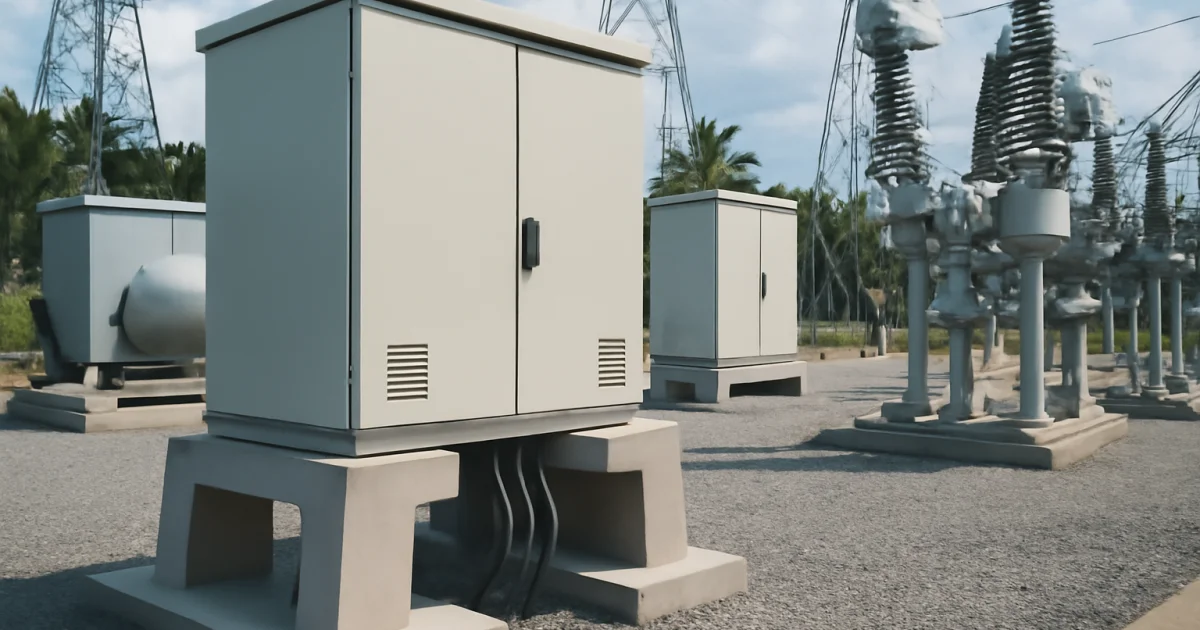
As Malaysia’s cities and industries expand, the need for robust, safe, and forward-thinking utility infrastructure has never been greater. At the core of many electrical, water, and communications projects lies the CSU Plinth—a foundational element supporting control, switchgear, and utility equipment. Recent years have seen rapid innovation in CSU Plinth technology, offering engineers, contractors, and public agencies a range of new possibilities for safer, more efficient, and longer-lasting infrastructure.
Understanding CSU Plinths: Their Role and Importance
CSU Plinths serve as the critical base for control and switchgear units in utility installations, substations, and industrial environments. They provide stable, elevated platforms that protect sensitive equipment from ground moisture, flooding, and mechanical impact. Historically, plinths were constructed from concrete or steel, but changing project demands and evolving safety standards have pushed the industry to seek better solutions.
Beyond supporting weight, these plinths are essential for ensuring equipment longevity and maintaining operational efficiency. By keeping vital systems elevated, maintenance teams reduce downtime caused by water ingress, corrosion, or pest infiltration. In the context of Malaysia’s tropical climate, this elevation is especially crucial to manage heavy rainfall and high humidity, both of which can quickly compromise unprotected equipment.
Material Evolution: From Concrete to Advanced Composites
Traditional plinths, while durable, often presented challenges. Concrete is heavy, difficult to transport, and susceptible to cracking over time. Steel, though strong, can corrode in humid or chemically aggressive environments. Today, Fiber Reinforced Polymer (FRP) composites are increasingly used in manufacturing CSU Plinths. FRP offers numerous advantages:
- Corrosion resistance: FRP does not rust or degrade when exposed to water, chemicals, or outdoor conditions, making it ideal for Malaysia’s varied climate.
- Lightweight construction: Compared to concrete or steel, FRP plinths are far easier to transport and install, reducing labor costs and project timelines.
- High strength-to-weight ratio: FRP can support substantial loads without the bulk of traditional materials.
- Customizability: Manufacturers like OCM can tailor FRP plinths to specific dimensions, load requirements, and functional needs.
These material innovations are not just theoretical—they are already making a measurable difference on Malaysian project sites and in demanding industrial settings.
Additionally, FRP plinths contribute to sustainability goals by minimizing the environmental impact associated with quarrying, transporting, and curing concrete. Their lighter weight also reduces the carbon footprint of transportation, especially for remote or inland project sites. In situations where installation must occur on unstable or reclaimed land, FRP’s low weight helps avoid ground settlement issues that can plague heavier traditional plinths.
Design Innovations: Smarter, Safer, and More Versatile Plinths
Modern CSU Plinth designs go well beyond basic function. Today’s innovations focus on improving safety, ease of installation, and adaptability to unique site needs. Some key trends include:
- Integrated cable management: Advanced plinths feature built-in channels or ducts, keeping power and communication cables organized, secure, and protected from accidental damage or tampering.
- Modular construction: Plinths can be assembled in sections, allowing for rapid deployment and flexibility in tight or awkward spaces.
- Surface finishes: Non-slip, UV-resistant, and colored finishes are available to improve safety and blend with architectural surroundings.
- Anti-vandal and anti-theft features: Enhanced locking mechanisms, reinforced structures, and tamper-resistant installation methods help deter unauthorized access.
Design flexibility is essential, especially for large infrastructure projects with diverse site requirements. By working closely with experienced manufacturers, contractors can specify plinths that meet both technical and site-specific challenges.
For example, modular plinth designs can be pre-fabricated and shipped to site in flat-pack form, reducing transport costs and on-site assembly time. In urban environments where space is limited and access is constrained, this modularity simplifies logistics and allows for phased installation alongside ongoing construction work. In addition, built-in cable management reduces the need for secondary containment, streamlining project design and ensuring compliance with safety codes.
Raising Safety Standards in Utility Infrastructure
Safety is paramount in utility and industrial environments. CSU Plinth innovations directly support safer operations by:
- Reducing trip hazards: Properly elevated equipment minimizes obstacles on the ground, lowering the risk of workplace accidents.
- Protecting against flooding: In flood-prone regions, elevated FRP plinths can be manufactured to specific heights, keeping equipment above water even during heavy rainfall.
- Electrical insulation: FRP’s non-conductive nature reduces the risk of accidental electrical faults or shocks.
- Improved visibility and labeling: Custom colors and printed markings help maintenance teams quickly identify equipment zones and hazards.
By integrating these safety features, project owners and contractors can better comply with regulatory requirements and international best practices.
Safety audits increasingly focus on the accessibility and clarity of equipment layouts. Modern plinths can be designed with contrasting color schemes to highlight danger zones or guide maintenance personnel. Tactile indicators and anti-slip surfaces further reduce the risk of slips and falls, especially in wet or poorly lit environments. Additionally, the use of non-conductive FRP materials aligns with best practices for electrical isolation, reducing liability for site operators and supporting compliance with Malaysian electrical safety codes.
Real-World Applications: CSU Plinths Across Sectors
The impact of CSU Plinth innovations is evident in a variety of Malaysian sectors:
- Power and utility substations: Enhanced FRP plinths provide secure mounting for control panels, switchgear, and transformer enclosures, even in challenging outdoor and industrial environments.
- Industrial manufacturing facilities: Custom-sized plinths support pumps, machinery, and monitoring equipment, offering resistance to chemical spills and heavy impacts.
- Water and wastewater treatment: In corrosive, high-moisture settings, FRP plinths offer unmatched longevity and hygiene compared to traditional materials.
- Public infrastructure projects: Roadside cabinets, communication towers, and traffic management systems benefit from modular, tamper-resistant plinth designs.
Contractors and engineers increasingly specify advanced FRP plinths for new builds and retrofits, seeking higher performance and reduced maintenance needs.
For instance, in the transportation sector, modular plinths are used to support remote signaling equipment and traffic cameras on highways, where theft and vandalism have historically caused significant losses. Anti-tamper designs and enhanced anchoring protect these investments and ensure uninterrupted service. In the oil and gas industry, FRP plinths withstand chemical exposure and mechanical vibration, providing stable bases for critical safety systems such as emergency shutoff valves and monitoring stations.
Case Study: Custom FRP Plinths in Utility Projects
Consider a recent infrastructure upgrade in Selangor, where aging concrete plinths supporting utility enclosures were replaced with custom-designed FRP alternatives. The project faced several challenges: limited site access, high groundwater, and the need for minimal downtime during installation. By switching to modular FRP plinths, the contractor achieved:
- Faster installation, with sections light enough for manual handling
- Better resistance to constant moisture and chemical exposure
- Lower lifecycle costs due to reduced need for repairs or replacement
- Enhanced equipment security with integrated locking provisions
This real-world example illustrates how innovations in plinth design and materials directly translate to safer, more efficient utility infrastructure.
Another notable case involved a major telecommunications provider upgrading their rural cell towers. Traditional concrete plinths had failed due to ground settlement and seasonal flooding. By deploying lightweight, adjustable FRP plinths, the provider was able to raise cabinets above historical flood levels, extend service life, and reduce maintenance dispatches by more than 30% over two years. The adaptability of FRP allowed for rapid retrofitting across dozens of sites, with minimal disruption to network uptime.
Choosing the Right CSU Plinth: Practical Considerations
For construction companies, public agencies, and industrial operators, selecting the appropriate CSU Plinth involves more than just material preference. Key factors to consider include:
- Load requirements: Ensure the plinth is engineered to support the installed equipment, accounting for dynamic and static forces.
- Environmental conditions: Factor in exposure to moisture, chemicals, UV, and temperature extremes—FRP is often preferred for its resilience.
- Installation logistics: Lightweight, modular plinths minimize the need for heavy machinery and speed up project timelines.
- Compliance and certifications: Work with ISO-certified manufacturers who understand local standards and can provide supporting documentation.
- Customization: Many projects benefit from plinths tailored to specific site layouts, equipment footprints, and access requirements.
Partnering with a specialized manufacturer—such as OCM, which offers both standard and custom FRP solutions—ensures each project receives a fit-for-purpose product that meets both safety and operational goals.
It is also vital to conduct site surveys and risk assessments before finalizing plinth specifications. Consult with manufacturers about factors such as seismic activity, wind loading, soil stability, and anticipated future upgrades. Consider building in spare capacity for future equipment expansion. Mistakes often occur when project teams underestimate environmental risks or fail to coordinate with equipment suppliers, leading to costly retrofits or compliance issues.
Checklist for selecting a CSU Plinth:
- Understand all equipment load and footprint dimensions
- Assess site-specific hazards (flood, chemical, vandalism, etc.)
- Verify compliance with relevant safety and electrical codes
- Consult with manufacturers about available customization features
- Plan for maintenance access and potential future upgrades
By following a structured selection process, infrastructure owners can avoid common mistakes such as underestimating load requirements, overlooking environmental hazards, or failing to plan for lifecycle maintenance.
The Future of CSU Plinths: Sustainability and Digital Integration
Looking ahead, this solution innovations will continue to evolve in response to emerging trends in construction and technology:
- Sustainable manufacturing: Eco-friendly resins, recycled reinforcement fibers, and energy-efficient production methods are increasingly common.
- Lifecycle monitoring: Embedded sensors may soon allow remote monitoring of plinth condition and equipment stability, reducing maintenance risks and costs.
- Smart integration: Plinths designed to accommodate IoT devices, smart meters, or automated controls will support the digital transformation of utility infrastructure.
- Adaptability: As urban environments change, modular and reconfigurable plinths will allow infrastructure to be upgraded without total replacement.
Continued collaboration between manufacturers, engineers, and project owners will be key to driving these advancements, ensuring infrastructure remains safe, reliable, and future-ready.
The push for green infrastructure is also influencing plinth design. Manufacturers are researching bio-based resins and recycled composite reinforcements, targeting lower energy consumption during production and end-of-life recyclability. Meanwhile, the integration of intelligent sensors and wireless communication modules is enabling predictive maintenance programs, allowing asset owners to schedule repairs proactively, reduce downtime, and optimize equipment performance. In smart cities, plinths are becoming part of the digital backbone, supporting not only electrical and communications equipment but also environmental sensors and public safety devices.
Conclusion: Securing Safer Infrastructure Through Innovation
the service innovations are transforming the landscape of utility and industrial infrastructure in Malaysia and beyond. By embracing advanced materials like FRP, smarter design features, and sustainability principles, contractors and facility owners can achieve safer, more resilient, and cost-effective projects. With a broad range of customizable options and proven expertise, manufacturers such as OCM are helping organizations meet demanding project requirements while preparing for tomorrow’s challenges.
Frequently Asked Questions
What is a CSU Plinth and why is it important in utility projects?
A CSU Plinth is a structural base used to support control, switchgear, and utility equipment in infrastructure projects. It raises equipment above ground level to protect against moisture, flooding, pests, and accidental impacts, ensuring long-term reliability and safety.
How do FRP materials improve CSU Plinth performance?
FRP (Fiber Reinforced Polymer) materials offer superior corrosion resistance, durability, and strength-to-weight ratio compared to traditional concrete or steel. This makes FRP plinths lighter, easier to install, and more resistant to harsh environmental conditions, resulting in longer service life with less maintenance.
Can CSU Plinths be customized for specific project requirements?
Yes, leading manufacturers like OCM offer customizable CSU Plinths. They can be tailored in size, shape, load capacity, surface finish, and integrated features such as cable management or anti-theft mechanisms to suit unique project needs and site conditions.
What safety features are available in modern CSU Plinth designs?
Modern CSU Plinths may include non-slip surfaces, electrical insulation, integrated cable ducts, anti-vandal features, custom labeling, and modular construction for easier, safer installation. These features help meet safety standards and reduce operational risks.
How does choosing the right CSU Plinth benefit long-term infrastructure performance?
Selecting the right CSU Plinth minimizes maintenance, improves equipment protection, enhances site safety, and supports compliance with industry standards. Advanced plinths can also adapt to future technology upgrades, adding long-term value to infrastructure investments.
Advance Your Next Project with Innovative CSU Plinth Solutions from OCM
Are you planning a utility or industrial project that demands safety, durability, and custom engineering? OCM specializes in FRP-based CSU Plinths and a full suite of composite solutions tailored for infrastructure excellence. Benefit from expert manufacturing, flexible customization, and end-to-end support—from design to installation. Discover how OCM can elevate your project’s reliability and safety today.
Disclaimer Statement
We hope you found this article informative. Our content is intended for general informational purposes only and does not constitute advice or necessarily reflect the full range of services offered by OCM Enterprise
Readers are advised to consult with a qualified industry professional and contact our experts for crane recommendations specific to their individual project needs. While we strive for accuracy and completeness in our blog posts, we cannot guarantee they are error-free. OCM Enterprise assumes no responsibility for any errors or omissions.